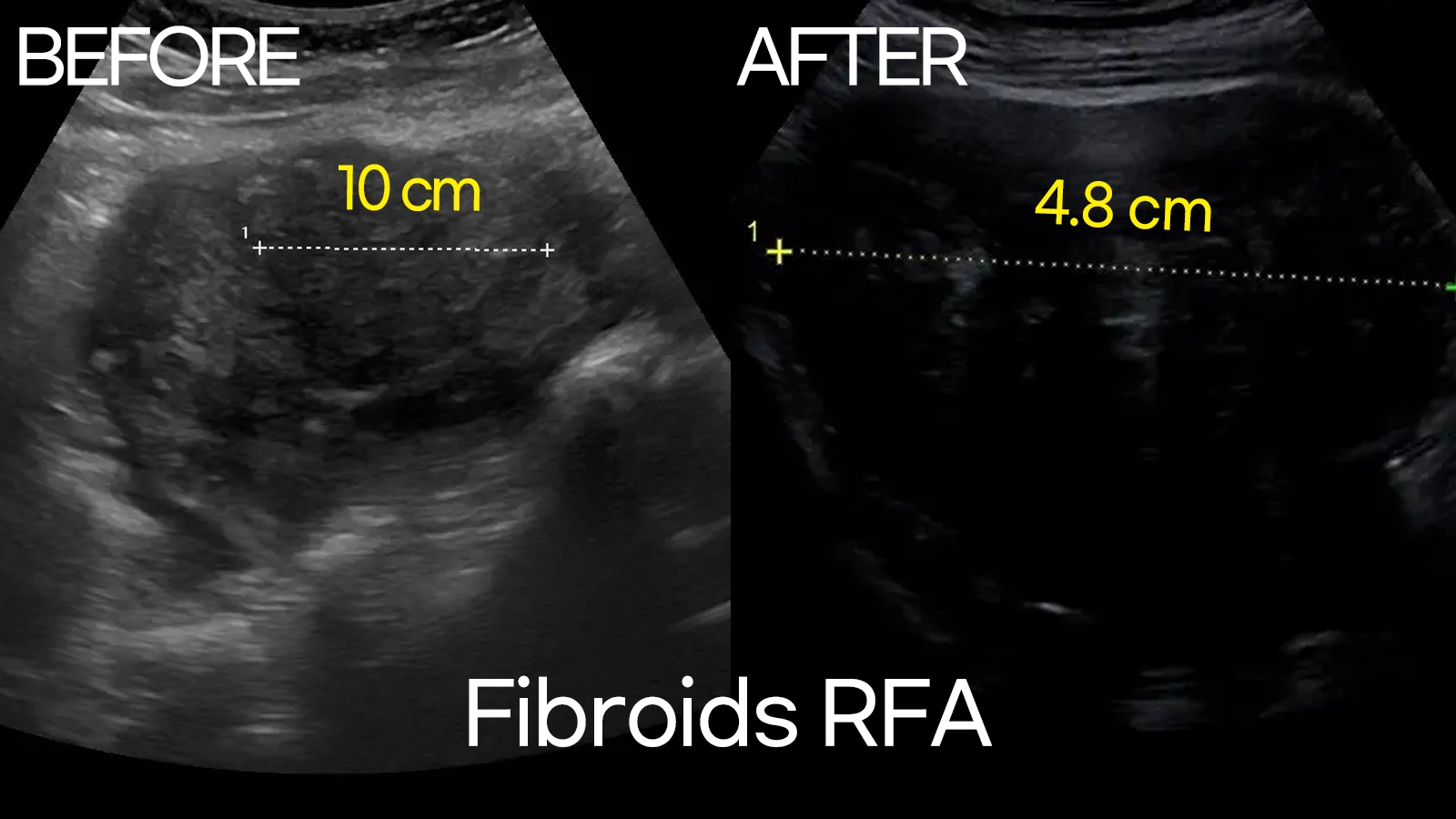
What the record tells us
- Procedure label
- RFA (radiofrequency ablation), as labelled by the clinic
- Source
- Clinic-supplied comparison previously included in FORME
- Treatment date & follow-up interval
- Not supplied
- Treating doctor, patient history & number of sessions
- Not supplied
- Symptoms, recovery, complications & fertility outcomes
- Not supplied
What this cannot establish
These are the measurements printed on the supplied images. The follow-up interval is not stated; they do not establish a change in volume or describe symptoms.
Images are illustrative clinical records, not independently verified outcome evidence. They do not establish a cure, symptom relief or what another patient can expect.
How to use this case in a decision
First ask whether the diagnosis, symptoms and treatment goal resemble your own. A scan comparison cannot tell you which option is appropriate for you. Request the original measurements, treatment date and follow-up interval so a clinician can explain what changed.
Then separate the imaging finding from patient benefit. Ask whether bleeding, pain or pressure changed, whether medicines or additional procedures were needed and whether complications occurred. Pregnancy outcomes cannot be inferred from a uterine scan.
What to ask for before comparing results
Ask for the assessment before treatment, the exact procedure and device, the number of sessions, consistent imaging technique and the length of follow-up. A clinician should discuss alternatives alongside the case, including why the same approach may not be suitable for another patient.
Bring these questions to your consultation
- Were the scans taken with comparable technique and measurements?
- What was the interval, and what changed clinically?
- Were other treatments used?
- What were the complications, alternatives and follow-up findings?
Commercial disclosure: clinic-supplied material; no independent case audit has been completed.